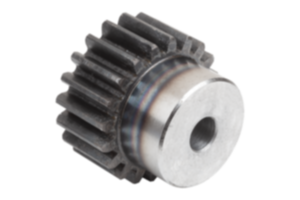
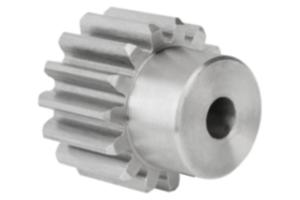
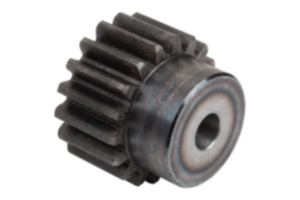
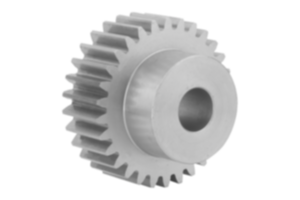
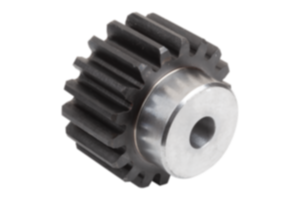
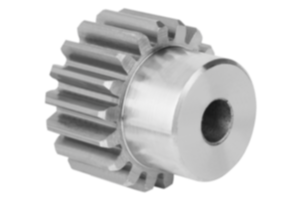
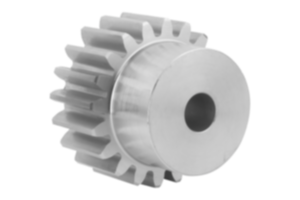
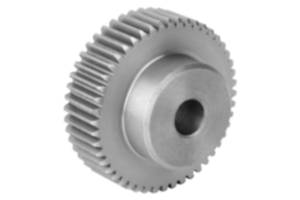
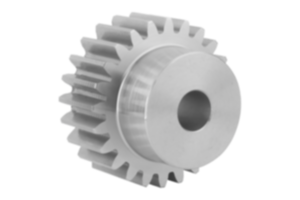
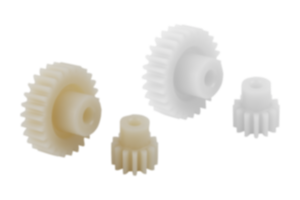
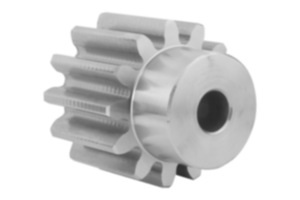
Ruota dentata cilindrica droite polyacétal 22402-1100042
- High hardness
- Lower coefficient of friction
- Long service life
- High security against tooth breakage
Unité de vente
3,60 CHF
hors TVA
Ajouté à votre panier
Désignation
Roue dentée
Modèle 1
droite
Modèle 2
avec moyeu
Matériau
du corps de base
polyacétal
B=Largeur
9
D1=Diamètre du cercle divisé
42
D2=Alésage de fixation
8
N=Nombre de dents
42
B1
4,6
D
44
D3
18
D4
27
L
18
Module
1
couple
max.
en Ncm
59,3
~ CONFLICT MINERALS 3TG status
no intentional 3TG
~ CP65 substance 2 cancer
soots, tars, and mineral oils
~ PFAS free?
not yet identified
~ REACH SVHC-free?
yes
~ RoHS conformity
yes, without exemption
~ TSCA 6(H) conformity
yes
Description
Material
Polyacetal (POM) or polyketone (PK).
Version
Injection moulded, straight teeth. Engagement angle 20°. Machined bore.
Polyacetal, white.
Polyketone, ivory-tone.
Polyacetal, white.
Polyketone, ivory-tone.
Note
Polyacetal: Standard material with high hardness grade and low coefficient of friction.
Polyketone: Material with significantly longer service life, higher power transmission and greater security against tooth breakage due to the extraordinarily high wear resistance and very good tribological properties.
Can be used under water and other media.
Injection moulded gear wheels may have internal manufacture-related cavities. These may become visible during drilling or broaching. They do not impair the function.
Temperature range
-40 °C to +140 °C (taking amount and duration of load into account).
Attention
The torques specified in the tables relate exclusively to the toothing. The shaft diameter, key size, etc. are not taken into account. The permissible load calculations are based on the basic principles of the pitting load capacity of the tooth flanks as well as the occurring tooth root stress. The respective permissible load of a gear wheel depends on so many different factors that the values specified can only be reference values meant to make selection easier. The torque specifications relate to a single tooth. The overlap, which is essential for determining the transmissible torque, occurs depending on the pitch diameter, gear wheel pairing, etc. In the simplest straight tooth cases, an overlap ratio of 1.1 to 1.25 is normal. To increase the overlap, a higher number of teeth with smaller modules is used. A good profile overlap can minimise damage such as pitting.
Remarque importante concernant le téléchargement des modèles CAO
Pour pouvoir télécharger nos modèles CAO, vous devez d’abord connecter. Si vous n’avez pas encore créé de compte, inscrivez-vous en cliquant sur « Mon compte » (à droite de l’écran) et suivez les instructions.
Other customers also bought