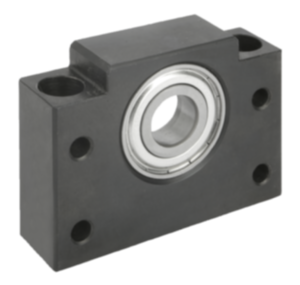
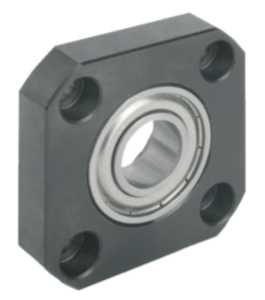
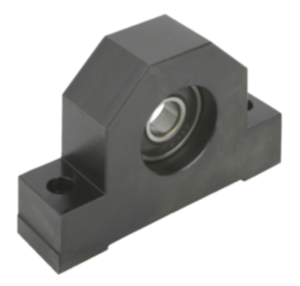
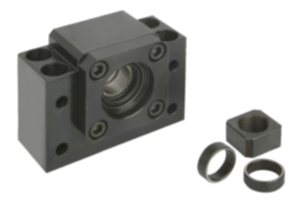
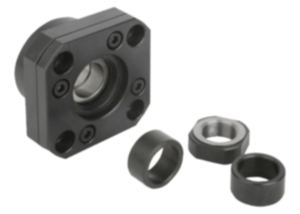
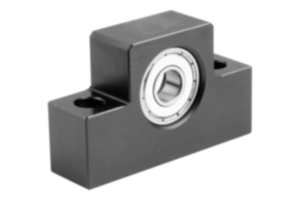
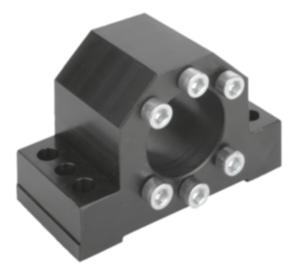
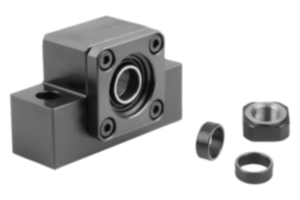
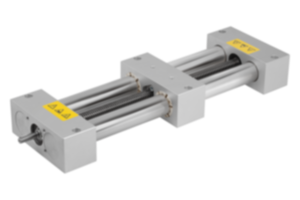
Fixed bearing unit steel 24072-015
- Support of radial and axial forces from both directions
- Highest stiffness, precise tool positioning and repeatability
- With two-row, pretensioned angular contact ball bearings
- Can be screwed on from top and bottom
- Can be pinned with two tapered pins or dowel pins
Unité de vente
573,35 CHF
hors TVA
Ajouté à votre panier
Designation
Fixed bearing unit
Main
material
steel
D1=Internal diameter
15
B
108
B1
63
B2
66
D2
9,7
D3
10,5
D4
M12
D5
32
D6
60
Dynamic
load rating
N
17900
E
88
E1
29
H
72
H1
39
H2
27
H3
10
H4
19
L
46
L1
10,5
L2
25
M
M15x1
Static
load rating
N
28000
Stiffness K
(N/µm)
400
Suitable
for
spindel Ø
20
T
18
~ CONFLICT MINERALS 3TG status
not yet identified
~ CONFLICT MINERALS procurement
DRC conflict-free
~ CP65 substance 2 cancer
soots, tars, and mineral oils
~ PFAS free?
not yet identified
~ REACH SVHC-free?
yes
~ RoHS conformity
yes, without exemption
~ TSCA 6(H) conformity
yes
Description
Material
Housing steel.
Version
Housing black oxidised.
Note
The axis height of the spindle bearings is matched to the floating bearing units 24074 and the housings for flange nuts 24070. The housings may be screwed on from above or below and pinned with two taper pins or cylindrical pins. Reference faces on both sides ease unit alignment.
Ready to install fixed bearing units with double row preloaded high-accuracy bearings and a 60° thrust angle. They accept both radial and axial forces from both directions and, due to preloading provide for highest rigidity, concentricity, precise tool positioning and repeatability.
Ready to install fixed bearing units with double row preloaded high-accuracy bearings and a 60° thrust angle. They accept both radial and axial forces from both directions and, due to preloading provide for highest rigidity, concentricity, precise tool positioning and repeatability.
Drawing reference
1) angular-contact thrust ball bearing
2) M slotted nut
2) M slotted nut
Remarque importante concernant le téléchargement des modèles CAO
Pour pouvoir télécharger nos modèles CAO, vous devez d’abord connecter. Si vous n’avez pas encore créé de compte, inscrivez-vous en cliquant sur « Mon compte » (à droite de l’écran) et suivez les instructions.
Other customers also bought