{"product":{"productId":"agid.27646","price":278.24,"name":"Rotary lever clamps, pneumatic double-acting"},"currency":"CHF"}


Matière
Housing aluminium.
Piston steel.
Piston steel.
Finition
Piston hardened.
Afficher plus
Afficher moins
Description
Description du produit
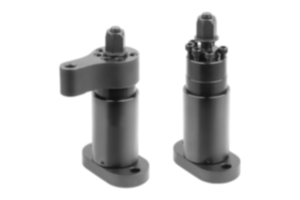
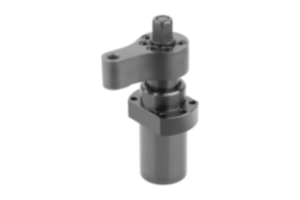
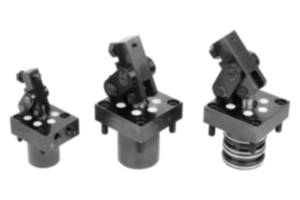
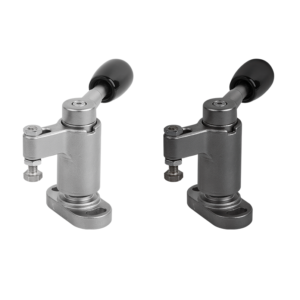
Rotary lever clamps are highly suited for use in cramped conditions. Due to the compactness of the rotary lever clamps, they can be used in a variety of ways in clamping fixtures with little use of space and thus often enable flexible solutions.
Matière
Housing aluminium.
Piston steel.
Piston steel.
Finition
Piston hardened.
Nota
By the rotary lever clamps, the clamping lever is connected to the piston rod. The air supply for the rotary lever clamps is via drilled channels.
The clamping lever moves towards the workpiece with a linear stroke and clamps it. When releasing, the clamping lever retracts so far that the workpiece can be removed vertically. The single stroke of a rotary lever clamp depends on the clamping lever selection.
The clamping elements must be checked regularly for dirt and cleaned if necessary.
When selecting the installation position, it must be ensured that no swarf nests can form in the swivel area of the lever of the rotary lever clamp.
The flange surface of the rotary lever clamp should be adapted to the height of the workpiece during installation and a horizontal positioning of the clamping point should be available.
By positioning the rotary lever clamp correctly, workpiece tolerances can be optimally compensated for despite the short clamping lever.
High forces can be generated with the rotary lever clamps. It must be ensured that the workpieces and clamping fixtures are designed for these loads.
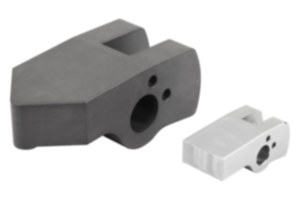
Rotary lever clamps can be fitted with individual tension levers. The clamping force of a rotary lever clamp is dependent on the lever length.
The tension lever for the rotary lever clamp is not supplied.
Follow safety instructions.
The clamping lever moves towards the workpiece with a linear stroke and clamps it. When releasing, the clamping lever retracts so far that the workpiece can be removed vertically. The single stroke of a rotary lever clamp depends on the clamping lever selection.
The clamping elements must be checked regularly for dirt and cleaned if necessary.
When selecting the installation position, it must be ensured that no swarf nests can form in the swivel area of the lever of the rotary lever clamp.
The flange surface of the rotary lever clamp should be adapted to the height of the workpiece during installation and a horizontal positioning of the clamping point should be available.
By positioning the rotary lever clamp correctly, workpiece tolerances can be optimally compensated for despite the short clamping lever.
High forces can be generated with the rotary lever clamps. It must be ensured that the workpieces and clamping fixtures are designed for these loads.
Rotary lever clamps can be fitted with individual tension levers. The clamping force of a rotary lever clamp is dependent on the lever length.
The tension lever for the rotary lever clamp is not supplied.
Follow safety instructions.
Consignes d´utilisation
Drilled channels.
Données techniques
Max. operating pressure: 6 bar.
Montage
See mounting contour.
Avantages
- No lateral forces during clamping.
- Low mounting dimensions.
- Wide selection of levers.
- Collision-free accessibility to the workpiece.
- Lineless pressure supply.
- Low mounting dimensions.
- Wide selection of levers.
- Collision-free accessibility to the workpiece.
- Lineless pressure supply.
Contenu de la livraison
Supplied with 4 DIN EN ISO 4762 cap screws, grade 8.8.
Sur demande
Larger piston diameters, longer strokes and with position control.
Indication de dessin
1) Tension lever length (see 04624-30)
2) Travel (see 04624-30)
3) see accessories
4) Mounting contour
5) Rounded edges
6) Loosen
7) Clamping
2) Travel (see 04624-30)
3) see accessories
4) Mounting contour
5) Rounded edges
6) Loosen
7) Clamping
Remarque importante concernant le téléchargement des modèles CAO
Pour pouvoir télécharger nos modèles CAO, vous devez d’abord connecter. Si vous n’avez pas encore créé de compte, inscrivez-vous en cliquant sur « Mon compte » (à droite de l’écran) et suivez les instructions.
D'autres clients ont également acheté