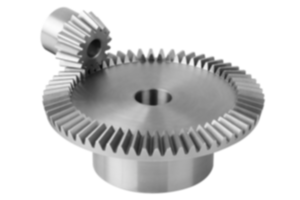
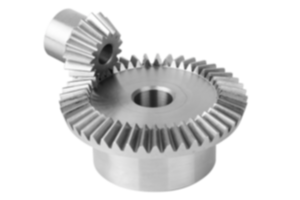
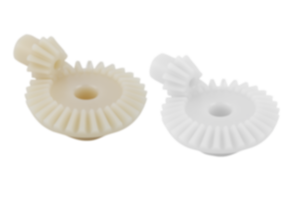
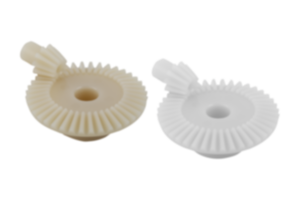
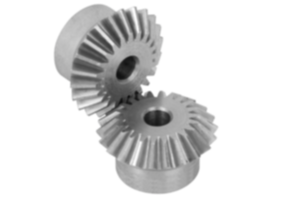
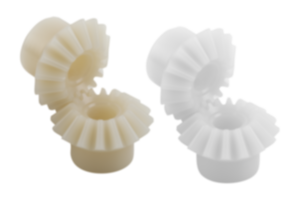
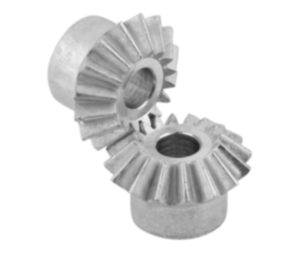
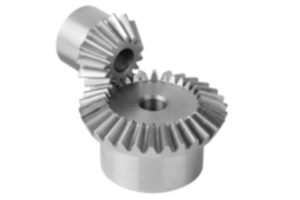
Pignon conique droite polycétone 22432-230120030
- Durezza elevata
- Coefficiente di attrito basso
- Lunga durata utile
- Protezione efficace contro la rottura dei denti
Sales unit
15,34 CHF
plus sales tax
Added to your shopping cart
Désignation
Pignon conique
Modèle 1
droite
Matériau
du corps de base
polycétone
D1=Diamètre du cercle divisé
90
D3=Filetage
18
L=largeur
37,5
N=Nombre de dents
30
A1
49,9
B
20,5
D
92,5
D2
45
L1
19
L2
33,8
Module
3
Rapport de transmission
1:2
couple
max.
en Ncm
730,3
~ CONFLICT MINERALS 3TG status
no intentional 3TG
~ CP65 substance 2 cancer
soots, tars, and mineral oils
~ PFAS free?
not yet identified
~ REACH SVHC-free?
yes
~ RoHS conformity
yes, without exemption
~ TSCA 6(H) conformity
yes
Description
Materiale
Poliossimetilene (POM) o polichetone (PK).
Versione
Stampato, dentatura diritta. Angolo di pressione 20°. Angolo asse = 90°.
Foro a partire dal modulo 1,5 lavorato.
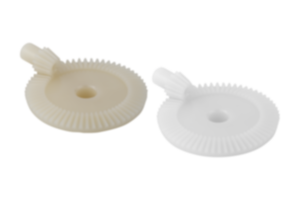
Poliossimetilene bianco.
Polichetone color avorio.
Foro a partire dal modulo 1,5 lavorato.
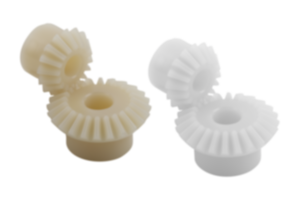
Poliossimetilene bianco.
Polichetone color avorio.
Nota
Poliossimetilene: sostanza standard con elevata durezza e basso coefficiente di attrito.
Polichetone: sostanza con durata utile decisamente maggiore, trasmissione di potenza più elevata e maggiore sicurezza contro la rottura dei denti grazie a un'eccezionale resistenza all'abrasione e a ottime caratteristiche tribologiche.
Utilizzabile sotto l'acqua e altri fluidi.
Ruote dentate stampate possono presentare cavità interne in seguito alla produzione. Queste possono diventare visibili durante la foratura o in presenza di scanalature. La funzione non viene per questo compromessa.
Gli ingranaggi conici vengono forniti come singoli pezzi. Per ricevere una coppia di ruote coniche, ordinare anche la ruota di accoppiamento indicata.
Range di temperatura
-40 °C to +140 °C (taking amount and duration of load into account).
Attention
The torques specified in the tables relate exclusively to the toothing. The shaft diameter, key size, etc. are not taken into account. The permissible load calculations are based on the basic principles of the pitting load capacity of the tooth flanks as well as the occurring tooth root stress. The respective permissible load of a gear wheel depends on so many different factors that the values specified can only be reference values meant to make selection easier. The torque specifications relate to a single tooth. The overlap, which is essential for determining the transmissible torque, occurs depending on the pitch diameter, gear wheel pairing, etc. In the simplest straight tooth cases, an overlap ratio of 1.1 to 1.25 is normal. To increase the overlap, a higher number of teeth with smaller modules is used. A good profile overlap can minimise damage such as pitting.
Important note on downloading CAD models
In order to download our CAD models, you must log in first. If you have not created an account yet, please register under "My Account" (right side of the screen) and follow the instructions.
Other customers also bought